Have you ever opened a YouTube to MP3 converter, pasted a link, hit download — and then that little voice in the back of your head asked: "Wait, is this actually legal?"
You're not alone. It's one of those things millions of people do every day without really knowing the answer. And the frustrating part is that when you search for it, you get two types of articles: ones that scream "IT'S ILLEGAL, DON'T DO IT" and ones that wave it off with "personal use is fine, don't worry." Neither of those is the full picture.
So here's what I'll do in this article: give you the actual answer, grounded in real law and real enforcement history. No scare tactics, no false reassurance.
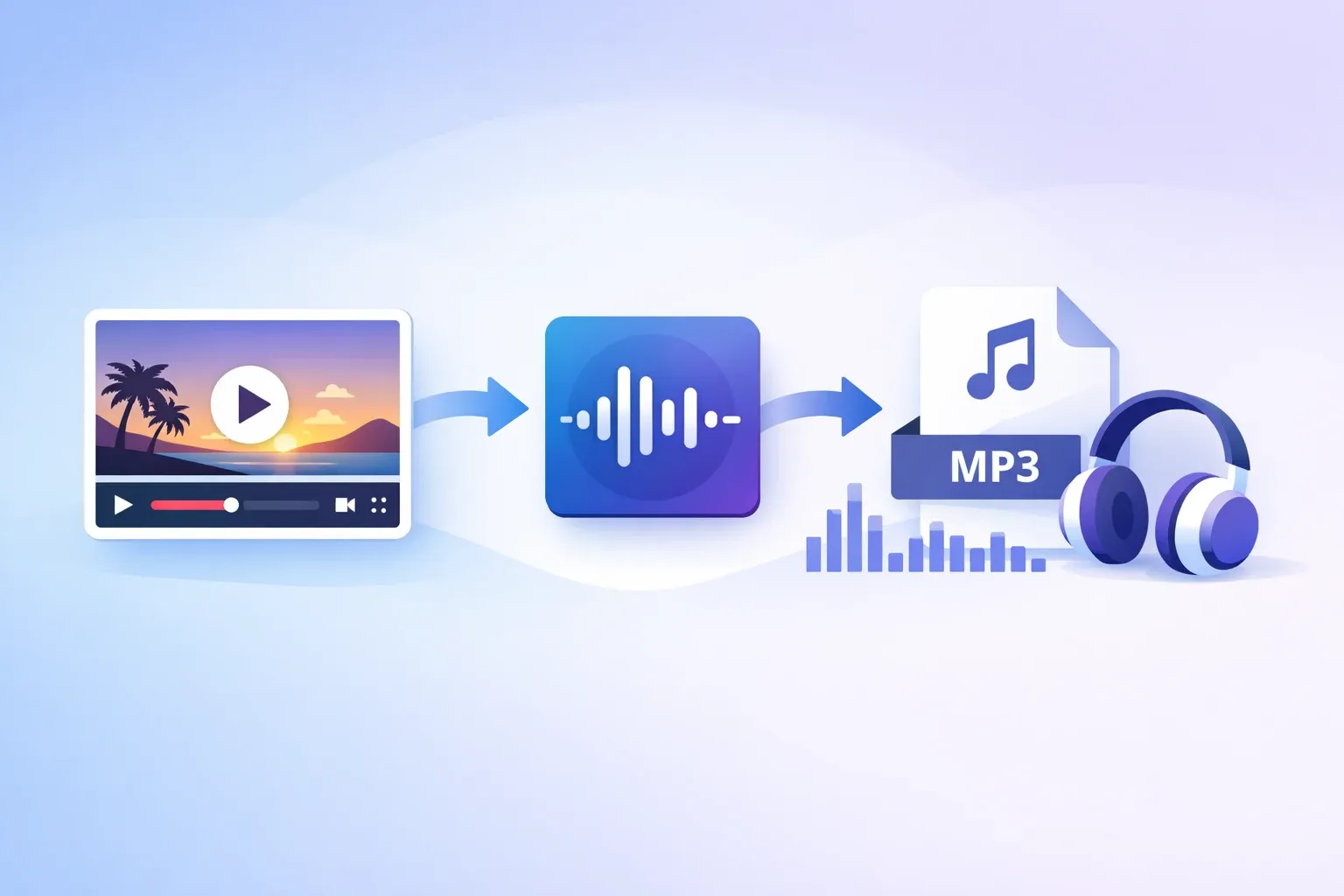
The Quick Answer (Before We Get Into the Weeds)
Three Types of YouTube Content, Three Different Legal Situations
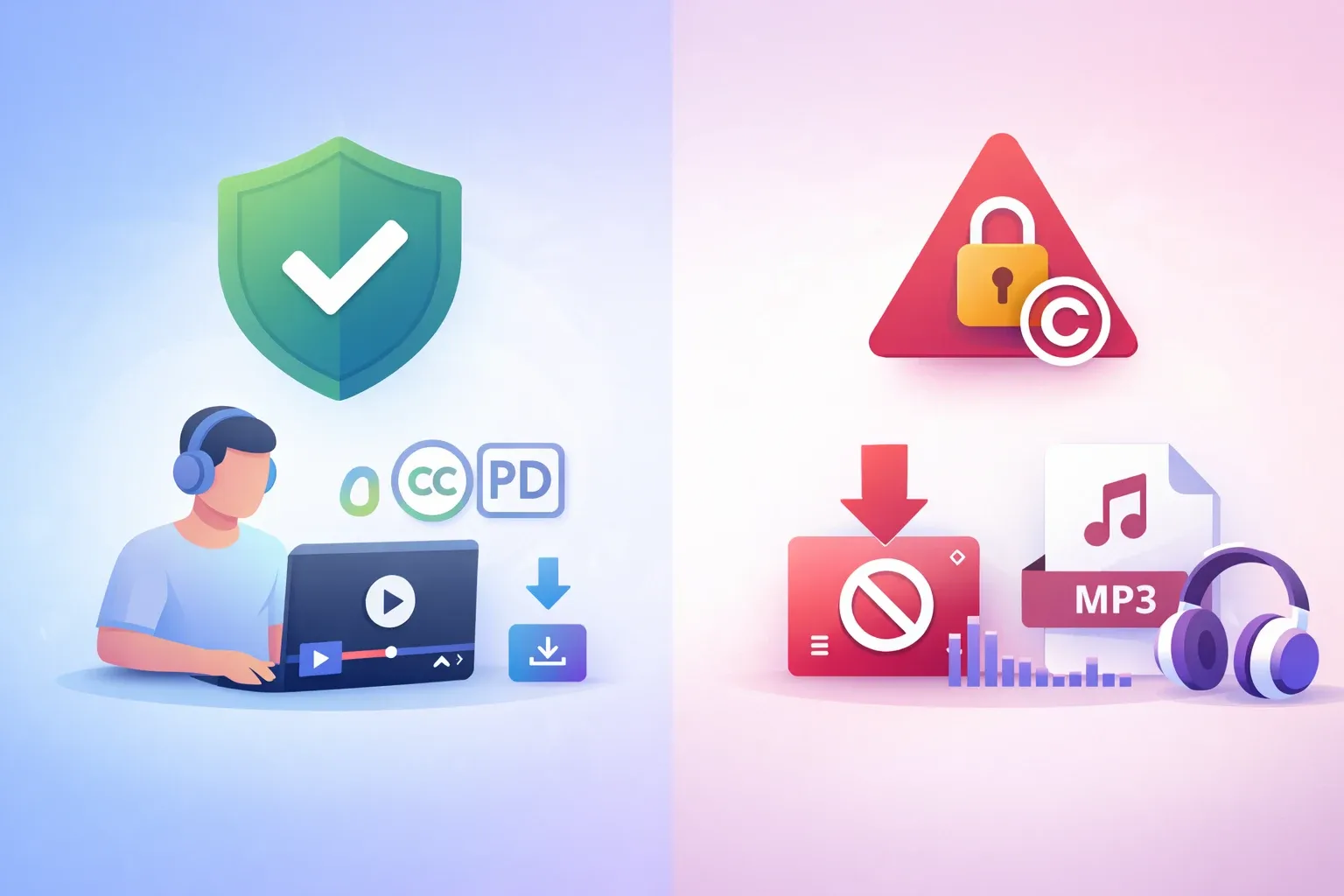
The honest answer is: it depends on what you're downloading.
| Content Type | Legal to Download? | Risk Level |
|---|---|---|
| Copyrighted music / commercial videos | ❌ Technically no | Medium |
| Creative Commons licensed content | ✅ Yes (with conditions) | Low |
| Your own uploaded videos | ✅ Always | None |
| Podcasts / lectures (with creator permission) | ✅ Often yes | Low |
| YouTube Premium offline feature | ✅ Official / sanctioned | None |
Most people asking this question are thinking about the first row — downloading a song or a music video they like. That's the legally murky one, and we'll spend most of this article there.
Why "It Depends" Is the Only Honest Answer
The law hasn't caught up with reality here. Courts haven't issued a definitive ruling on whether an individual downloading a song for personal use is criminally liable. The music industry's legal battles have targeted converter sites, not the people using them. That gap — between what the law technically says and how it's actually enforced — is where most of the confusion lives.
What YouTube's Rules Actually Say
The Exact Line in YouTube's Terms of Service
This isn't speculation. YouTube's Terms of Service includes a direct prohibition:
"You shall not download any Content unless you see a 'download' or similar link displayed by YouTube on the Service for that Content."
There's no carve-out for personal use. No exception for educational purposes. If there's no official download button on the page, YouTube's rules say you shouldn't be downloading it.
That said, violating a website's Terms of Service is a contract issue — not a criminal one. It's meaningfully different from breaking copyright law, which carries real penalties.
What Actually Happens If You Violate the ToS?
The consequences depend heavily on who you are.
For regular viewers: YouTube has no practical way to monitor every person who pastes a URL into a converter. Account bans for this are essentially unheard of for individual users with no prior history.
For content creators: This is where ToS violations actually bite. YouTube's three-strike system can result in content removal, demonetization, and permanent channel termination. YouTube removed over 15 million channels in Q1 2024 — the vast majority for policy violations, not just downloading.
For converter site operators: These are the people who actually get sued. We'll cover that in the next section.
The Content ID System — YouTube Already Knows More Than You Think
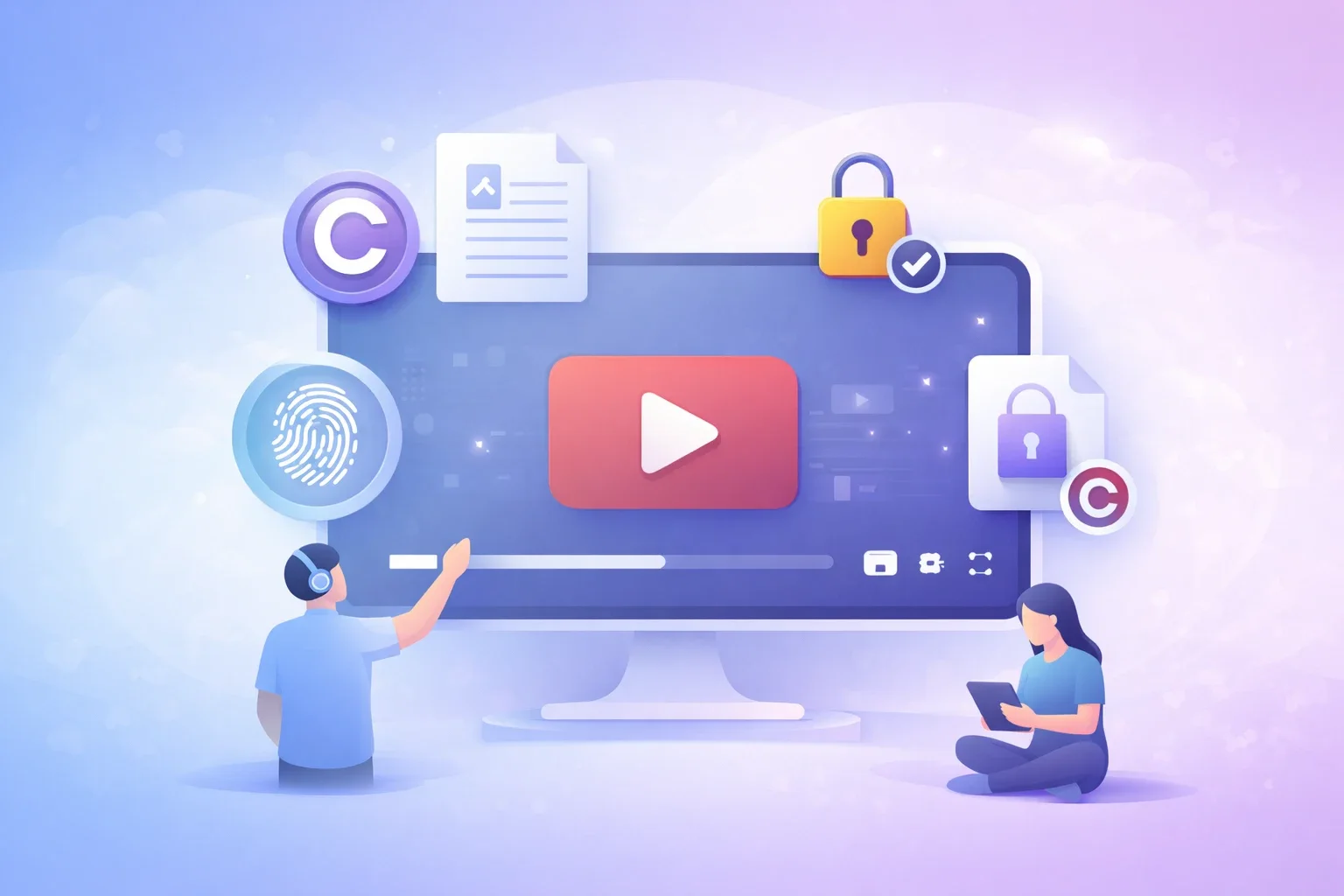
Here's something most people don't realize: YouTube isn't oblivious to how its content gets used. The Content ID system fingerprints virtually every video on the platform and automatically claims ad revenue on behalf of rights holders when their content is detected.
What this means practically is that the music industry has largely decided to monetize unauthorized playback rather than chase down individual listeners. The business logic is: if 10 million people are going to listen to a song on YouTube anyway, it's more profitable to run ads over it than to litigate.
What Copyright Law Actually Says
Two Separate Legal Issues Most People Don't Know About
When someone converts a YouTube video to MP3, there are actually two distinct legal questions, and most articles only cover one of them.
Issue 1 — Copyright Infringement: Making an unauthorized copy of protected content. This is the one people usually think about.
Issue 2 — DMCA Anti-Circumvention (Section 1201): Bypassing the technical protection measures that YouTube uses to protect its streams. This is a separate violation that can apply even if the underlying content would otherwise be legally obtainable.
YouTube's streams use encryption and obfuscation to prevent direct download. Any tool that captures that stream is technically circumventing a technological protection measure — which is what DMCA §1201 was written to prohibit.
What Are the Actual Penalties on Paper?
Numbers from the statute — not to scare you, but so you have the real picture:
| Violation | Civil Penalty | Criminal (Willful) |
|---|---|---|
| DMCA circumvention (per act) | $200 – $2,500 | Up to $500K + 5 years prison |
| Copyright infringement (per work) | $750 – $30,000 | — |
| Willful copyright infringement | Up to $150,000 | Up to $250K + 10 years |
These numbers are alarming. Here's the necessary context: there is no recorded case of an individual user being sued for privately downloading a YouTube video for personal listening. The RIAA and music labels have consistently targeted platforms and distributors, not end users.
The German Court Case That Changed the Conversation
In 2017, a German court reviewed YouTube-mp3.org — at the time the world's most popular YouTube converter — and issued a nuanced ruling.
The court drew an analogy to VHS tape recorders in the 1990s. People recorded TV shows at home for personal playback, and courts had generally tolerated that as private copying. The judge applied similar logic to audio format conversion: extracting personal audio from a stream you're legally watching isn't categorically different from recording a broadcast.
The court ordered the site to stop storing tracks on its servers (that crossed into distribution), but the personal format-shifting argument held some weight.
This is the strongest legal precedent in favor of individuals. The caveat: it's a German ruling. It doesn't govern US law.
Where US Law Actually Stands Right Now
The RIAA sued YouTube-mp3.org in US federal court in 2018. The case targeted the site itself — not any of its millions of users. The operators eventually settled and shut down the service.
No US court has ruled on whether individual users who privately download YouTube audio are criminally liable. As of 2026, that remains an open legal question.
When It's 100% Legal
Content You Uploaded Yourself
The simplest case: if you put it on YouTube, you can take it back. YouTube Studio has an official download feature — click on any of your videos, go to the options menu, and download the original file. No converter needed.
YouTube's Official Offline Feature
YouTube does offer a legal way to access offline audio — through its paid subscriptions.
| Plan | Price/Month | Offline Playback | Export as MP3? |
|---|---|---|---|
| Free | $0 | ❌ | ❌ |
| YouTube Premium Lite | $7.99 | ✅ (App only, 29 days) | ❌ |
| YouTube Premium | $13.99 | ✅ (App only, 29 days) | ❌ |
The limitation is real: downloads are DRM-locked, expire after 29 days, and can only be played inside the YouTube app. You can't transfer them to other devices or apps, and there's no MP3 export. For people who want a genuine file they can keep, this isn't a complete answer — but it is the only fully sanctioned offline option YouTube provides.
Creative Commons Videos on YouTube
This is the option most people overlook. A meaningful portion of YouTube content is published under Creative Commons licenses, which explicitly permit downloading and reuse.
How to find CC content on YouTube:
- Search for your topic as normal
- Click Filters → Features → Creative Commons
- All results shown are CC-licensed
CC license types you'll encounter:
| License | What You Can Do | Attribution Required? |
|---|---|---|
| CC0 (Public Domain) | Anything — modify, redistribute, commercialize | No |
| CC BY | Any use including commercial | Yes — credit the creator |
| CC BY-SA | Any use, but share-alikes must use same license | Yes |
| CC BY-NC | Non-commercial use only | Yes |
Common mistake: "Royalty-free" and "Creative Commons" are not the same thing. Royalty-free means no per-use licensing fees, but the content may still have significant restrictions. Creative Commons is a specific open licensing framework with defined rules. Don't assume one applies when you see the other.
The YouTube Audio Library
YouTube maintains a free library of music and sound effects specifically for creators and general use. Everything in it is licensed for download with no hoops to jump through.
It's less well-known than it should be. Go to YouTube Studio → Audio Library. Tracks are searchable by genre, mood, duration, and attribution requirements. It's not massive, but it's genuinely free and legal.
The Gray Area — Let's Be Honest About It
What Most People Are Actually Doing
If we're being real, most people aren't downloading copyrighted music to pirate it or sell it. The scenarios are usually something like:
- Grabbing the audio from a conference talk or lecture to listen to on a run
- Saving a live performance that only exists on YouTube
- Extracting a specific piece of ambient music from a video essay
None of these feel like piracy in any intuitive sense. But legally, the distinction between "feels like piracy" and "technically infringes copyright" is where things get uncomfortable.
Does Already Owning the Album Make It Legal?
This one comes up a lot. The argument goes: "I paid for this album on Spotify. I've bought it twice on different platforms. Surely downloading the YouTube version is fine?"
Legally: no. Each license you purchase is tied to a specific platform and use case. Your Spotify subscription licenses you to stream through Spotify's app. It doesn't grant rights to copies from other platforms.
Morally: a lot of people find that outcome absurd, and I don't entirely disagree. But the law as written doesn't have a "you already paid for it" exception.
The Real Risk Picture for Individuals
| Personal Use Only | Sharing / Distributing | |
|---|---|---|
| One-time download | Very low risk | Medium risk |
| Repeated / Bulk downloading | Low–medium risk | High risk |
| Commercial use | Medium–high risk | High risk |
Copyright enforcement resources go toward the biggest impact targets. A person downloading 20 songs for personal use doesn't register. A person uploading those to a file-sharing service, or using them in commercial content without licensing, does.
Podcasts, Lectures, and Speeches: Different Rules Apply
Podcasts on YouTube
Many podcast creators deliberately upload to YouTube as a distribution channel — and a good number of them actually want listeners to have the audio. Check the description or the creator's website before assuming you can't download.
Some signs a creator is fine with it:
- They provide an RSS feed or podcast link in the description
- They explicitly say "download available at..."
- The content is published under a CC license
When in doubt, just ask. Most independent creators respond to direct messages about this sort of thing.
TED Talks and Academic Lectures
This is an easy one that people overthink. TED's official website (ted.com) has direct MP3 and transcript downloads for nearly every talk — no converter required, no legal ambiguity.
Similarly, MIT OpenCourseWare, Khan Academy, and many university lecture series provide official audio downloads. Going directly to the source is always the better option.
Government Content and Public Domain Material
Content produced with US federal government funding is generally in the public domain. That includes NASA footage, congressional testimony, many CSPAN recordings, and similar materials.
This doesn't cover state governments or foreign governments — those operate under different rules. But for federal US content, public domain status is a reliable default.
Legal Sources for Free Music (If That's What You're After)
For Casual Listeners
If the goal is just listening to music legally without paying, there are real options:
- Spotify Free — ad-supported, full catalog, completely legal
- YouTube Music Free — same deal, YouTube's own service
- SoundCloud Free — large catalog of independent music, much of it explicitly permissioned for streaming
For Content Creators Who Need Licensed Music
| Platform | License Type | Cost | Size |
|---|---|---|---|
| YouTube Audio Library | Various (CC + royalty-free) | Free | 1,000+ tracks |
| Free Music Archive | CC (multiple types) | Free | 150,000+ tracks |
| Jamendo | CC for personal; paid commercial | Free / Paid | 600,000+ tracks |
| ccMixter | CC-BY | Free | 50,000+ tracks |
| Bandcamp | Artist-defined | Free–Paid | Millions |
| Musopen | Public domain classical | Free | 10,000+ recordings |
Jamendo is particularly worth knowing about: 40,000+ artists have chosen to share their music for free personal use. The catalog is searchable and genuinely good.
For Getting Audio from Videos Without Downloading the Original
This is the option that most legal guides don't cover, because it's relatively new.
If what you actually want is to understand or retain the content of a video — a lecture, a podcast episode, a long interview — rather than the original audio file itself, AI tools like TurboCast work differently. Instead of copying the original, they analyze the video and generate something new: a transcript, a structured summary, or an AI-narrated podcast version.
The output is a new piece of content derived from the original — not a copy of it. That's a meaningfully different legal and ethical position than grabbing an MP3 file.
If offline listening to content (rather than music) is the use case, TurboCast's AI Transcriber handles this well and produces something you can actually read, search, or listen to in a condensed format.
If You're a Creator: What If Someone Converts YOUR Video?
How Content ID Protects Your Work
If you're uploading original content to YouTube, Content ID is your primary protection layer. The system fingerprints your audio and video and automatically matches it against uploads from other accounts.
When a match is found, you have options: monetize it (run ads, collect revenue), mute the infringing audio, or block the content entirely. Most larger creators default to monetize, because it turns unauthorized use into a revenue stream rather than a legal battle.
To enable Content ID, you need to apply through YouTube's rights management program — it's not automatic for new channels.
How to File a DMCA Takedown
If Content ID doesn't catch something and you find your content being redistributed without permission:
- Go to YouTube's Copyright Center (youtube.com/copyright_complaint_form)
- Select the type of content being infringed
- Provide the URLs of both the original and the infringing content
- Submit — YouTube typically processes takedowns within 7–10 business days
One thing to know: false DMCA claims carry their own liability. Don't file takedowns on content that has meaningfully transformed your original work (criticism, commentary, parody) — those may legitimately qualify as fair use.
Want People to Use Your Content Legitimately? Set a CC License
If you're creating educational content, tutorials, or anything you want to spread widely, setting a Creative Commons license on your YouTube videos is worth considering.
You can do this in YouTube Studio under Video Details → License — switch from "Standard YouTube License" to "Creative Commons Attribution." This tells users they can use and adapt your content as long as they credit you.
It won't stop all unauthorized use, but it legitimizes the kind of use you probably welcome anyway — people learning from your content, sharing it, and building on it.
FAQ
Is it illegal to download YouTube videos for personal use?
Technically, yes — under US law it violates both YouTube's Terms of Service and potentially DMCA §1201's anti-circumvention provisions. In practice, no individual has ever been prosecuted for personally downloading YouTube content. The legal risk is real but enforcement at the individual level is essentially nonexistent.
Can I get in trouble for using a YouTube to MP3 converter?
The bigger practical risk isn't legal — it's security. Sites like YTMP3, Y2Mate, and CNVMP3 are well-documented sources of aggressive adware, fake download buttons, and occasional malware. Your device is more at risk than your legal standing.
Is it legal to convert YouTube to MP3 if I already own the album?
Legally, no. Each platform license is specific to that platform. Morally, many people find this unreasonable, and I understand why. The law and common sense diverge here. That's just where things stand.
Are Creative Commons YouTube videos free to download?
Yes — that's the point of the license. CC0 content has no restrictions at all. CC-BY content requires you to credit the creator. Always check the specific license type; not all CC licenses permit all uses.
What's the difference between royalty-free and Creative Commons?
Two completely different systems that get mixed up constantly. Royalty-free means you pay once (or nothing) and don't owe fees per use — but restrictions may still apply. Creative Commons is an open licensing framework with six defined license types published by the Creative Commons organization. Neither implies the other.
Is downloading YouTube podcasts legal?
Often yes, but it depends on the creator. Many podcast creators welcome listeners downloading their content — check the video description or their website. If they link to an RSS feed or official podcast platform, that's a clear signal they're fine with it.
What happens if YouTube detects me downloading?
For regular viewers: almost certainly nothing. YouTube's enforcement infrastructure targets sites operating at scale, not individuals. For creators using converter tools on their own channel (to grab their own uploads), there's no issue either.
Is there a completely legal way to get audio from YouTube?
Yes, a few:
- YouTube Premium offline downloads (app-only, DRM-locked)
- YouTube Audio Library (direct download, fully licensed)
- Creative Commons content filtered through YouTube's search
- Your own uploaded videos via YouTube Studio
- AI tools like TurboCast that generate new derived content rather than copying the original file
So Where Does That Leave You?
Here's the honest summary, without the legal boilerplate:
If you want to download copyrighted music: It's technically illegal, the real-world enforcement risk for individuals is very low, but the ethical argument that you're undercutting creators is real.
If you want to use audio for content creation: Use the YouTube Audio Library, Jamendo, or the Free Music Archive. There's no reason to risk it when legitimate free options exist.
If you want to retain the information from a video: Skip the converter entirely. TurboCast generates a transcript or AI podcast summary you can listen to anywhere — no grey area, no sketchy pop-ups, and you actually get something more useful than a raw audio file.
For a practical walkthrough of the actual download methods (yt-dlp, desktop apps, VLC), see our companion guide: How to Download YouTube to MP3 on PC: 5 Methods That Actually Work.